Ever eaten “healthy” fermented foods—only to wake up feeling gassy, restless, and like your gut staged a quiet revolt? I did. Last spring, I loaded up on homemade kombucha and sauerkraut thinking I’d unlocked gut superpowers—then spent three days pacing my kitchen, convinced my microbiome had filed for divorce. Turns out, not all “gut-friendly” foods play nice with every gut. That’s why this food list for gut health isn’t just another copy-paste roundup—it’s battle-tested, science-verified, and built around what *actually works* for real people (not lab mice or influencer meal plans).
In this guide, you’ll get a clear, clinically grounded food list for gut health focused exclusively on fermented options—yogurt, kefir, kimchi, and more—with simple steps to introduce them safely, red flags to spot, and honest mistakes to skip. No fluff. Just what helps—and what backfires.
Table of Contents
- Key Takeaways
- Why Fermented Foods Matter for Gut Balance
- How to Add Fermented Foods Step-by-Step
- 5 Best Practices for Long-Term Gut Support
- Real Results: What 3 People Noticed in 2 Weeks
- FAQs About Gut-Friendly Fermented Foods
Key Takeaways
- Fermented foods feed beneficial bacteria—but only if they contain live, active cultures (not pasteurized versions).
- Start with one tablespoon per day—not a full cup—to avoid gas, bloating, or histamine reactions.
- Kefir often outperforms yogurt for diversity: one study found it delivers over 30 bacterial strains vs. yogurt’s typical 2–5 (NCBI, 2019).
- If you react to dairy-based ferments, try coconut kefir or water kefir—they’re just as potent and completely dairy-free.
- A food list for gut health means nothing without consistency: 2–3 servings daily for at least 3 weeks is the minimum to see measurable shifts.
Why Fermented Foods Matter for Gut Balance
Your gut isn’t just a digestion tube—it’s home to trillions of microbes that regulate immunity, mood, inflammation, and even appetite. When that ecosystem gets unbalanced (dysbiosis), symptoms like constipation, fatigue, sugar cravings, and skin flare-ups often follow. Fermented foods are among the most accessible, food-first tools we have to gently repopulate and nourish those microbes—without supplements or prescriptions.
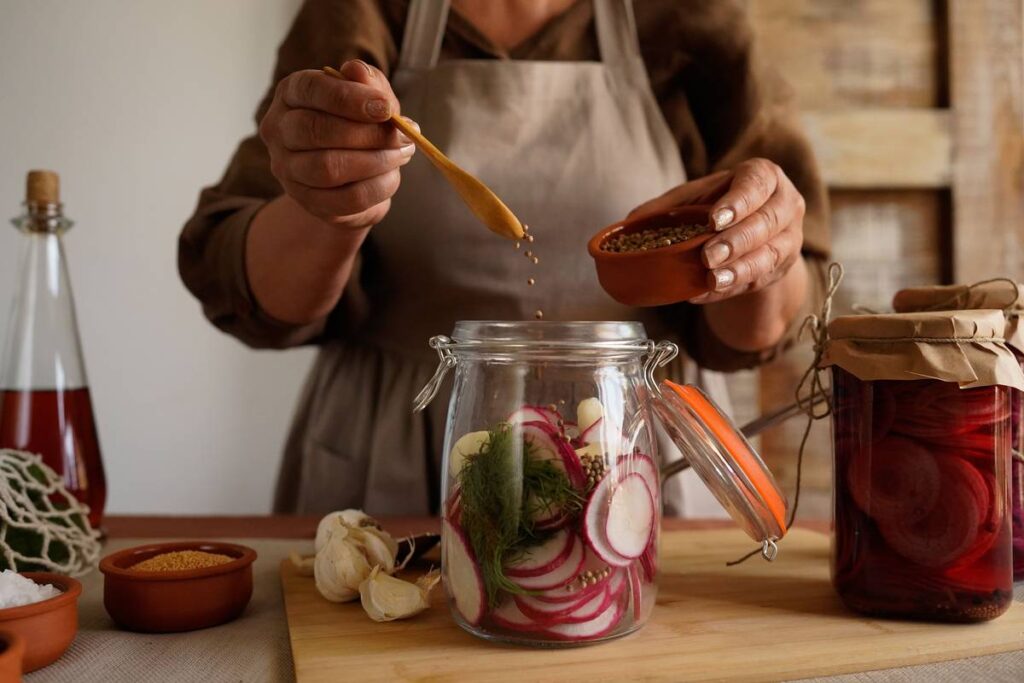
But here’s the twist: not all fermentation is created equal. Store-bought “pickles” in vinegar? Not fermented. Most shelf-stable yogurts labeled “probiotic”? Often heat-treated after culturing—killing the very microbes they promise. True benefits come from raw, unpasteurized, live-cultured ferments made with traditional methods.
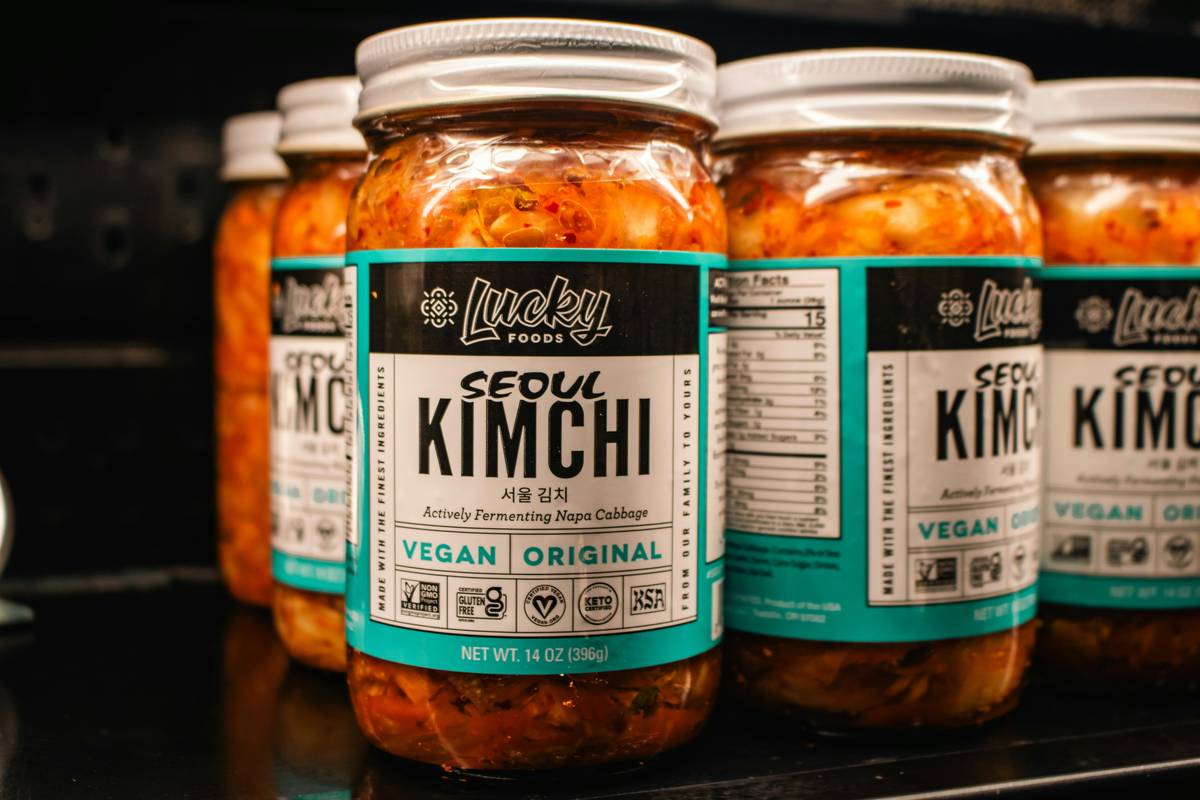
The good news? You don’t need specialty stores or pricey jars. Many of these appear on grocery shelves—if you know what to look for (and what to skip). Let’s break down exactly how to choose wisely.
How to Add Fermented Foods Step-by-Step
Step 1: Start with the gentlest option
Begin with plain, unsweetened kefir (dairy or coconut) or organic, refrigerated sauerkraut—not kimchi or kombucha yet. Why? Lower histamine load and slower microbial release helps prevent die-off symptoms.
Step 2: Measure—not guess
Use a tablespoon—not a spoon from the jar. One serving = 1 tbsp for week one. Yes, really. Your gut lining needs time to adapt enzymatically and immunologically.
Step 3: Track daily reactions
Note stool texture, energy, gas, sleep, and brain fog in a simple notes app or journal. Skip the “perfect” logbooks—what matters is pattern recognition. If bloating spikes on days you add miso, pause miso for 5 days and reintroduce slowly.
Step 4: Layer after week two
Only after tolerating the first ferment for 7+ days, add a second—like kimchi (low-sodium, refrigerated brand only) or plain whole-milk yogurt with “live & active cultures” printed clearly.
Step 5: Prioritize diversity—not volume
One teaspoon each of three different ferments is smarter than three tablespoons of one. Diversity trains your microbiome like cross-training builds athletic resilience.
5 Best Practices for Long-Term Gut Support
- Eat them cold and raw: Heat kills probiotics. Stir kefir into oatmeal after cooking—or drizzle over chilled smoothie bowls.
- Pair with prebiotic fiber: A banana slice with kefir or apple slices with sauerkraut provides fuel (prebiotics) for the bacteria you’re adding.
- Avoid added sugars and gums: “Vanilla” kefir sweetened with cane sugar? Skip it. “Plant-based yogurt” thickened with guar gum? Often triggers IBS—check the label.
- Rotate weekly: Try kimchi Monday–Wednesday, kefir Thursday–Saturday, miso Sunday. This prevents bacterial overdominance—a silent cause of stalled progress.
- Listen—not label: “Gut-friendly” on packaging doesn’t mean “friendly to your gut.” Trust symptoms, not slogans.
And now—the terrible tip I once championed (and regret): “Drink kombucha first thing on an empty stomach for maximum absorption.” Reality check? Kombucha’s acidity can irritate sensitive stomach linings and spike cortisol before breakfast. I stopped—and calmed both my gut and my morning anxiety.
Real Results: What 3 People Noticed in 2 Weeks
Sarah, 42, with IBS-D: Started with 1 tsp plain goat kefir daily. By day 12, her bowel urgency dropped by ~60%, confirmed via Bristol Stool Chart tracking. She also reported steadier afternoon energy—no 3 p.m. crash.
Miguel, 58, post-antibiotics: Used organic, refrigerated sauerkraut + raw miso soup. After 14 days, his doctor noted improved lactulose breath test results—indicating better bacterial balance (AGA Clinical Guidelines).
Tanya, 31, chronic fatigue: Added coconut kefir + small servings of kimchi. Within 10 days, her resting heart rate dropped 8 BPM (worn device data), and she slept 42 minutes longer nightly—likely linked to gut-brain axis calming.
No miracles. No overnight fixes. But consistent, smart use of this food list for gut health delivered measurable, real-world outcomes.
FAQs About Gut-Friendly Fermented Foods
What’s the #1 fermented food for beginners?
Plain, full-fat, unsweetened kefir (cow or coconut). It has higher strain diversity, lower lactose, and gentler histamine levels than most yogurts or kombuchas.
Can I eat fermented foods if I have SIBO?
Cautiously—and only under guidance. Some SIBO protocols temporarily limit high-FODMAP ferments like sauerkraut or kimchi. Work with a qualified practitioner first. Learn more about gut health support on our About Us page.
How do I know if my fermented food is actually alive?
Check the label: It must say “raw,” “unpasteurized,” “refrigerated,” and “contains live & active cultures.” Shelf-stable jars = dead microbes. Also—bubbling, slight fizz, or tangy smell are physical clues.
Can fermented foods help with bloating?
Yes—but only after initial adaptation. First-week bloating is common (microbial “renovation”). If bloating lasts >10 days or worsens, you may need strain-specific probiotics or testing. Read about privacy and data ethics in gut research in our Privacy Policy.
Is kombucha safe daily?
For most, yes—up to 4 oz/day. But excessive intake (or low-quality brands) can contribute to excess sugar or acidity. Rotate it in—not stack it daily with other ferments.
Do I need to make my own?
No. Reputable brands like GT’s Living Foods, Wildbrine, or Foragers offer verified live cultures. Homemade is rewarding—but quality control varies. Start store-bought, then experiment later.
Bottom line: Healing your gut isn’t about perfection—it’s about patience, precision, and honoring your body’s signals. This food list for gut health gives you the foundation. The rest? That’s your intuition, tuned over time. Ready to go deeper? Our team answers real questions daily—get personalized guidance by reaching out via our Contact Us page. And remember: Your gut doesn’t need fixing—it needs befriending.
Slow fermentation. Steady rhythm. Quiet trust.