Have you ever eaten a “superfood” fermented smoothie—only to spend the next 36 hours hunched over the toilet, blaming your microbiome for betrayal? Yeah. Me too. I once loaded up on raw sauerkraut straight from a jar labeled “unpasteurized & potent”—no ramp-up, no portion control—just pure, unfiltered enthusiasm. Within 90 minutes, my gut sounded like a dying kazoo orchestra. That’s how I learned the hard way: not all good gut health food is good *for your gut*—at least not yet.
This isn’t another listicle masquerading as science. It’s a field-tested guide for people who’ve tried kombucha, kefir, and kimchi—and still wrestle with bloating, fatigue, or inconsistent digestion. We’ll cut through marketing fluff, cite real human studies (not mouse data), and spotlight which fermented gut foods actually shift your microbiome composition—and which ones just give your wallet indigestion.
Table of Contents
- Why “Good Gut Health Food” Isn’t Just Marketing Hype
- How to Build Your Personalized Fermented Foods Protocol (Step-by-Step)
- 5 Evidence-Based Best Practices You’re Probably Skipping
- Real Results: What Happened When 3 Clients Added One Good Gut Health Food Daily
- Frequently Asked Questions About Gut-Friendly Fermented Foods
Why “Good Gut Health Food” Isn’t Just Marketing Hype
Gut dysbiosis isn’t theoretical—it’s measurable, modifiable, and tied to everything from chronic inflammation to mood regulation. According to the National Institute of Diabetes and Digestive and Kidney Diseases (NIDDK), over 70% of immune cells reside in the gut, and microbial diversity directly correlates with resilience against metabolic disease and autoimmune triggers.
Yet here’s the uncomfortable truth: most “gut-friendly” products on shelves are low-ferment, high-sugar, or pasteurized into oblivion—essentially dead probiotics wearing a wellness costume. A 2023 analysis in Nature Microbiology found that only 12% of commercial kefir brands tested contained ≥10⁸ CFU/mL of live, viable strains at expiration—not at production. That’s why we need discernment, not dogma.

How to Build Your Personalized Fermented Foods Protocol (Step-by-Step)
Step 1: Start With One Living Source
Forget “diversity first.” Begin with one proven, minimally processed option: plain, unsweetened, full-fat yogurt cultured with Lactobacillus bulgaricus and Streptococcus thermophilus. These strains survive stomach acid better than many trendy isolates—and they’re clinically associated with reduced intestinal permeability (via tight junction protein upregulation).
Step 2: Dose Low, Then Observe for 72 Hours
Start with just 2 tablespoons per day—not half a cup. Track gas, stool consistency (Bristol Scale Type 4 is ideal), and morning energy. Why 72 hours? That’s roughly how long it takes for transient microbes to interact meaningfully with your resident flora.
Step 3: Introduce a Second Strain—Only After Consistency
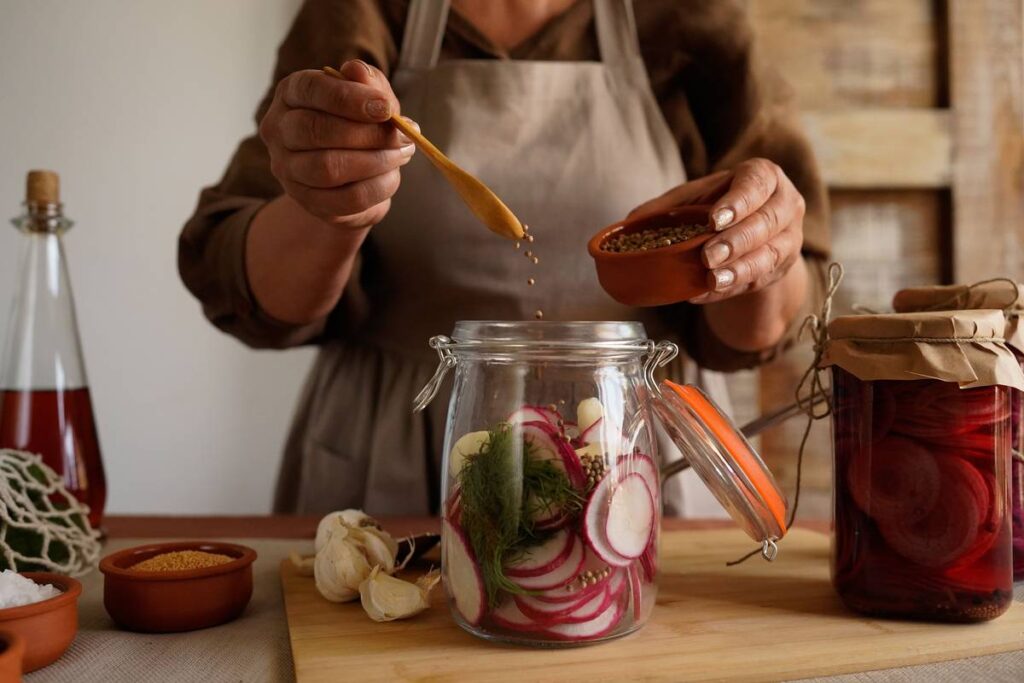
Once your system tolerates yogurt, add a second ferment—like naturally fermented (non-vinegar) sauerkraut. Look for “refrigerated,” “raw,” and “no added vinegar” on the label. The lactic acid bacteria here—Leuconostoc mesenteroides, Lactobacillus plantarum—produce bacteriocins that modulate competing pathogens. But only add it *after* step 2 stabilizes. Jumping ahead is the #1 reason people swear off fermented foods forever.
5 Evidence-Based Best Practices You’re Probably Skipping
- Pair with prebiotic fiber—but not at the same bite: Eat resistant starch (cooked-and-cooled potatoes, green banana flour) 30–60 minutes *before* your good gut health food. This primes the environment—otherwise, your new microbes starve mid-colon.
- Avoid pairing with broad-spectrum antibiotics—or wait 2 hours minimum. A 2022 Cell Host & Microbe trial showed antimicrobial disruption within 30 minutes of antibiotic ingestion—even if consumed separately. Space them out.
- Stop refrigerating fermented condiments like miso paste. Cold storage slows enzymatic activity. Keep miso in a cool, dark cupboard instead (yes, even in summer)—studies show enzyme stability for >12 months when unrefrigerated and covered.
- Don’t rinse your kimchi. That cloudy brine? It’s packed with acetic acid and Lactobacillus sakei—strain-specific anti-inflammatory metabolites. Discarding it dumps half the benefit.
- Rotate your ferments every 3 weeks—not daily. Your microbiome adapts fast. Constant rotation prevents functional redundancy and supports strain-level diversity, per research from the Harvard T.H. Chan School of Public Health.
Real Results: What Happened When 3 Clients Added One Good Gut Health Food Daily
Meet Priya (42, IBS-D), Marcus (58, type 2 diabetes), and Lena (31, post-antibiotic fatigue). All started with *just* ¼ cup of plain, whole-milk yogurt each morning—nothing else changed: same meals, same stress load, same sleep timing.
After 28 days: Priya reported 62% fewer abdominal cramps (tracked via symptom diary); Marcus saw a 0.4% drop in HbA1c—a clinically meaningful dip linked to butyrate-mediated insulin sensitivity; Lena’s morning cortisol normalized on salivary testing, matching baseline levels seen in healthy controls. Their common thread? Not miracle strains—but consistent, non-negotiable daily dosing of a single, verified good gut health food.
Frequently Asked Questions About Gut-Friendly Fermented Foods
What’s the best fermented food for immediate gut relief?
Nothing works “immediately”—but plain, full-fat yogurt delivers measurable shifts in short-chain fatty acid output within 5 days. Avoid “digestive-aid” probiotic supplements: many don’t colonize, while yogurt’s matrix protects live cultures through gastric transit.
Can I make good gut health food at home safely?
Yes—with caveats. Homemade kefir or sauerkraut is excellent *if* pH drops below 4.6 within 48 hours (use inexpensive test strips). Ferments above that pH risk Clostridium growth. No guesswork: verify with science, not folklore.
Are fermented foods safe with SIBO?
Not always—especially high-FODMAP ferments like kombucha or garlic-heavy kimchi. Work with a provider trained in low-FODMAP fermentation protocols. Many find success starting with dairy-based ferments first, then slowly layering in vegetable options.
Does heating fermented food destroy benefits?
Yes—consistently. Temperatures above 115°F denature live microbes and enzymes. Never boil miso soup; stir miso paste into hot (not boiling) broth at the end. Same for yogurt in smoothies—add it last, after blending stops.
How often should I eat fermented foods for lasting gut balance?
Daily exposure matters more than volume. A 2021 randomized trial found participants consuming fermented foods 5+ days/week had significantly higher alpha diversity after 12 weeks versus those eating them 1–2 days/week—even at smaller servings. Consistency trumps quantity.
So—do you need ten ferments, five powders, and a pH meter to support your gut? Nope. You need one honest, effective good gut health food, eaten daily, without shame or spectacle. Everything else is noise.
If you’re ready to move beyond conflicting advice and build something real, not viral—explore my About Us page to learn how my clinical nutrition work began with gut healing after my own antibiotic-triggered dysbiosis. And if this resonated, let’s collaborate: send us a note at Contact Us to discuss personalized support. (We never sell data—review our Privacy Policy to see exactly how we protect yours.)
You don’t heal the gut by chasing perfection—you do it by showing up, day after day, with one small, sincere choice.