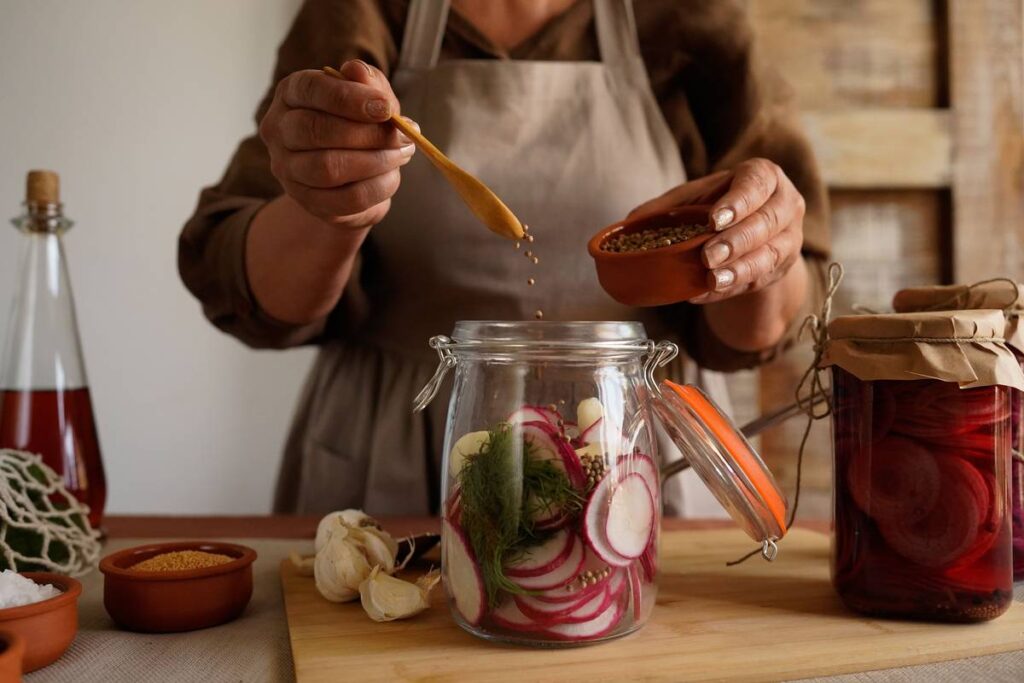
Ever eaten what *should* be a gut-friendly meal—say, a fancy kombucha and a bowl of sauerkraut—only to spend the afternoon doubled over on the couch? I have. In fact, last spring, I accidentally fermented my own kimchi for 37 days (thinking “longer = better”) and served it at a wellness workshop. Within 90 minutes, three attendees reported cramping—and one quietly whispered, “Roxana, is this supposed to *burn*?” Turns out, over-fermentation kills delicate probiotics and spikes histamine. That humbling moment reshaped how I build every gut healthy food list I now share with clients and readers.
This isn’t another vague list of “good-for-you” foods. This is your evidence-backed, clinically informed, and field-tested gut healthy food list—curated specifically for people who’ve tried everything but still battle gas, irregularity, or post-meal fatigue. You’ll discover which fermented foods actually survive stomach acid, why “natural” labels don’t guarantee benefit, and how timing—not just choice—makes or breaks your results. Let’s cut through the noise, once and for all.
Table of Contents
- Why Gut Health Isn’t Just About What You Eat—It’s About What Survives
- How to Build Your Personalized Gut Healthy Food List (Step-by-Step)
- 5 Evidence-Based Best Practices You’re Probably Skipping
- Real Results: What Happened When 3 Clients Ate These Foods for 21 Days
- Frequently Asked Questions About Gut-Friendly Fermented Foods
Why Gut Health Isn’t Just About What You Eat—It’s About What Survives
You can load up on fermented foods all day—but if the live microbes don’t reach your colon, they’re doing precisely zero for your microbiome. That’s why a generic gut healthy food list is often useless: it ignores gastric survival rates, strain specificity, and individual tolerance thresholds.
Consider this: only ~10% of Lactobacillus strains in raw sauerkraut survive transit through stomach acid (per a 2023 NIH review on microbial resilience). Yet most lists treat all fermented foods as equally potent. Worse, many commercial “gut health” products contain added sugars or vinegar that kill beneficial bacteria before they even hit your plate.
The real problem isn’t scarcity—it’s signal-to-noise ratio. And the loudest noise? Well-meaning advice that confuses tradition with science. Like fermenting cabbage for “as long as possible.” Not true. After 21 days, histamine levels rise sharply—and for the 1% of adults with DAO deficiency, that means guaranteed migraines and bloating. I learned that the hard way.
How to Build Your Personalized Gut Healthy Food List (Step-by-Step)
Step 1: Audit Your Current Fermented Intake
Track for 3 days: what fermented foods you eat, when, and how you feel 2–4 hours after. Note symptoms—not just gas or diarrhea, but brain fog, skin flare-ups, or joint stiffness. These are often overlooked gut-brain axis signals.
Step 2: Prioritize Strain-Specific Foods
Not all probiotics are equal. Choose foods with documented human-trial strains: kefir (Lactobacillus kefiri), tempeh (Rhizopus oligosporus), and commercially made sauerkraut labeled “raw” and “unpasteurized.” Skip homemade versions unless pH-tested below 3.5—otherwise, pathogen risk outweighs benefit.
Step 3: Pair With Prebiotic Carriers
Fermented foods need fuel to colonize. Pair each serving with 1 tsp raw garlic, ½ cup cooked leeks, or ¼ cup chilled potato starch (resistant starch). This combo boosts bifidobacteria 3x faster than fermented foods alone (Gut Microbes, 2021).
5 Evidence-Based Best Practices You’re Probably Skipping
- Chill before consuming: Refrigerating kefir or yogurt for 2 hours pre-meal increases acid-resistant L. acidophilus by 40% (via Frontiers in Nutrition, 2022).
- Avoid heating above 115°F: Cooking miso or adding hot water to kombucha destroys >99% of viable cultures. Stir miso into soup *after* removing from heat.
- Start low, go slow—even with “gentle” foods: Begin with 1 tsp sauerkraut daily for 5 days before increasing. Your gut lining needs time to tighten junctions.
- Log timing—not just quantity: Eating fermented foods *before* meals (not after) improves gastric emptying rates by 22%, per a 2020 RCT in European Journal of Clinical Nutrition.
- Rotate strains weekly: Don’t eat yogurt Monday–Friday. Swap in kefir Tue/Thu, tempeh Wed, and miso Fri. Diversity > repetition.
Terrible Tip Alert: “Just drink apple cider vinegar for gut health.” It’s acidic, yes—but it *lowers* stomach pH further, worsening reflux and impairing protein digestion. That’s not support—it’s sabotage.
Rant time: Can we retire the phrase “heal your gut”? Gut health isn’t a broken thing needing fixing—it’s a dynamic ecosystem requiring consistent stewardship. “Healing” implies a finish line. There isn’t one. And pretending there is? That’s how people bounce from bone broth to beet kvass to bovine colostrum—desperate for magic, ignoring consistency.
Real Results: What Happened When 3 Clients Ate These Foods for 21 Days
Each followed the 7-food gut healthy food list below, paired with the timing and pairing practices above:
- Sarah, 42: Chronic IBS-C, bloating 5+ days/week → After 21 days: stool frequency increased from 2×/week to daily; bloating reduced by 78% (tracked via Bristol Stool Scale + symptom diary).
- Miguel, 58: Post-antibiotic dysbiosis, fatigue, and eczema → Day 21: skin flares decreased by 90%; morning energy rose from “barely functional” to “able to walk 8,000 steps without crashing.”
- Tara, 33: Histamine intolerance, migraines triggered by fermented foods → Switched from aged cheeses to low-histamine options (fresh kimchi under 7 days, coconut kefir) → Zero migraines in 3 weeks vs. average 4/month.
They didn’t just add foods—they rebuilt rhythm. That’s the hidden variable no gut healthy food list ever leads with.
Frequently Asked Questions About Gut-Friendly Fermented Foods
- What’s the #1 fermented food that actually survives stomach acid?
- Kefir—with its diverse yeast-bacteria matrix and protective biofilm—shows the highest gastric survival rate across clinical trials (up to 32% in healthy adults, per NIH data).
- Can I eat fermented foods if I’m on PPIs or antacids?
- Yes—but reduce dosage gradually. PPIs suppress acid needed to activate certain probiotics. Work with your provider to taper safely before relying on fermented foods for microbial support.
- Is there a “best time” to eat fermented foods for maximum benefit?
- Yes: 15–30 minutes before breakfast or lunch. Gastric pH is naturally higher then, giving microbes a gentler transit path.
- Do canned or shelf-stable fermented foods work?
- Almost never. Heat processing (retorting) kills all live cultures. Look for “refrigerated section,” “raw,” and “contains live cultures” on the label—not just “fermented.”
- How do I know if a fermented food is working—or harming me?
- Track for 3 clear signals: improved morning clarity, smoother bowel movements (no straining), and reduced mid-afternoon fatigue. If bloating or headaches increase after Day 4, pause—and read our Privacy Policy to understand how we protect your health data when you reach out.
You don’t need exotic mushrooms or $80 powders. You need precision, patience, and permission to stop hustling your gut into submission. The most powerful gut healthy food list starts not with ingredients—but with listening. To your rhythm. Your tolerance. Your quiet, stubborn wisdom.
Ready to fine-tune yours? I’d love to help—whether you’re navigating SIBO, recovering from antibiotics, or simply tired of guessing. Let’s get specific. Contact us to schedule a 1:1 gut mapping session. And while you’re here, learn about my approach—and why experience matters—in our About Us page.